Fell Ponies in the New York TImes!

I admit that I don’t subscribe to the New York Times for coverage about ponies. As a result, it took someone else pointing out an article in that publication for me to notice it. I am grateful to Victoria Tollman of the Equus Survival Trust for bringing Fell Ponies and other rare equine breeds to the awareness of a completely new and different audience. The article “Some Horse Breeds Are Near Extinction. These People Are Trying to Save Them” was published December 10, 2025. (1)
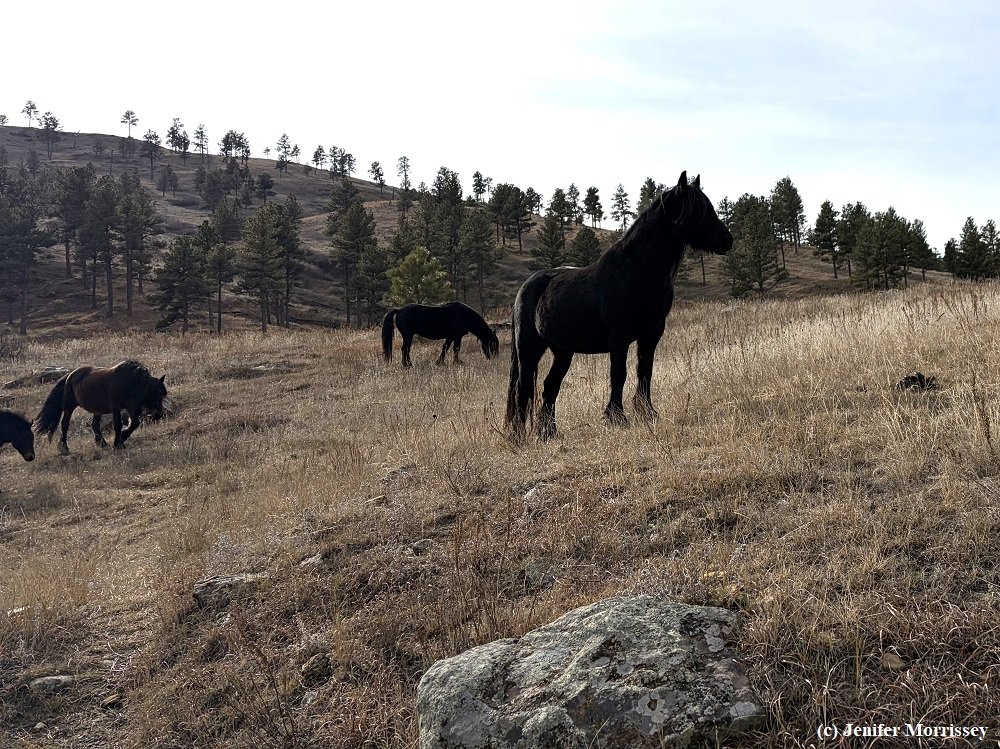
Fell Ponies at WIllowtrail Farm in the Black Hills of South Dakota.

With nearly thirty years of stewarding rare livestock breeds under my belt, the equine breeds and information about their rareness wasn’t new to me. What was interesting in the article, however, was reading about them from the perspective of a non-horse person. This perspective is so far in my past that it was helpful for me to experience it again. For instance, the story was decidedly about the human dimension of rare equine conservation - such as the seven generations of the Little family’s work with Mountain Pleasure horses - rather than the brass tacks of livestock stewardship. “Breeders like Little-Basil said they faced an uphill battle to not just produce healthy horses, but also promote interest to others to ensure their efforts last.” I also tripped multiple times over the use of ‘preservationist’ for people and organizations working on behalf of these breeds. More often I see the word conservation used in our circles.
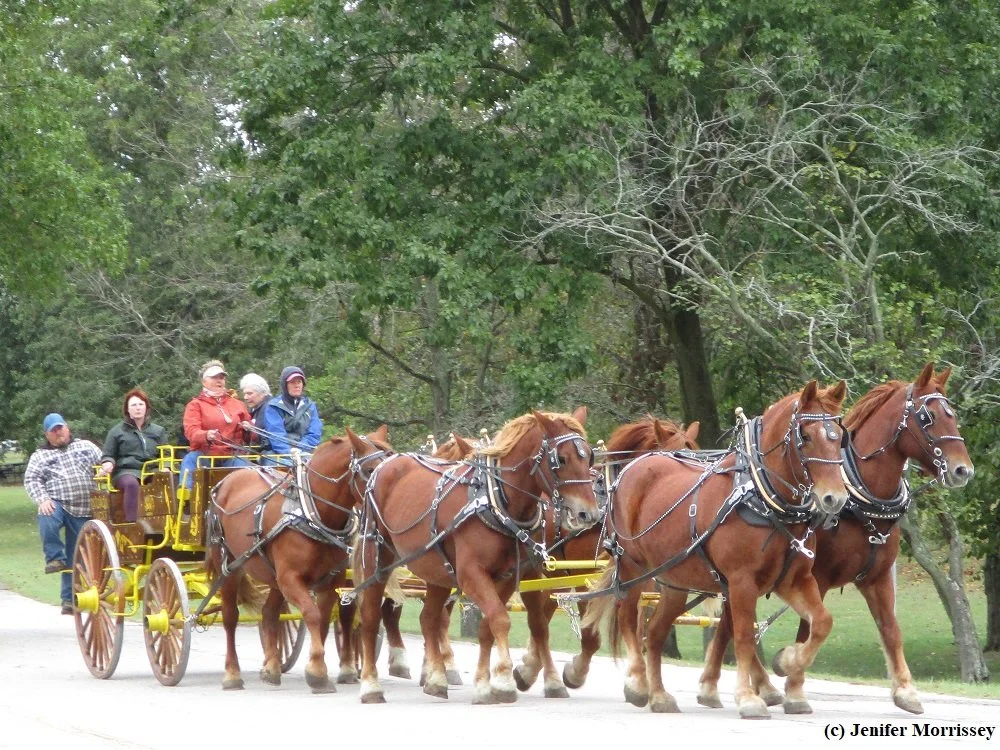
Bar S Suffolk Punch hitch at American Suffolk Horse Association Annual Meeting in 2019

The article opened with a story about a steward of Caspian Horses; Caspians were the only breed shown in a photograph. Fell Ponies were mentioned in the context of Tollman’s early involvement with the breed. “When Tollman discovered the breed in the 1990s, she said estimates put them at about 2,500 worldwide; today, she said, those numbers have nearly tripled.” Of course, Tollman also mentioned the late Queen Elizabeth II’s support for Fells. Other breeds mentioned included Suffolk Punch, American Cream Draft, the Choctaw, and the Hackney Horse.

With horse ownership being challenged by rising costs everywhere, it may become increasingly important to promote rare breed conservation to new and different audiences. I was surprised and pleased that the New York Times was receptive to the topic.

  1. Nir, Sarah Maslin. “Some Horse Breeds Are Near Extinction. These People Are Trying to Save Them,” The New York Times, 12/10/25.

© Jenifer Morrissey, 2025

Fell Pony Listed as Critical with The Livestock Conservancy

Matty and Theo at Willowtrail Farm

The latest issue of The Livestock Conservancy’s newsletter landed on my desk and immediately caught my attention.  The cover article explained changes to the organization’s Conservation Priority List for 2018.  I of course scanned it for the equine section and was surprised to read that the Fell Pony had been moved from Watch to Critical “based on global population numbers of less than 2,000.” (1)  This reasoning didn’t pass my common sense test, so I decided to learn more.

I felt fortunate when the organization’s executive director, Alison Martin, answered the phone when I called.  I explained that I felt there were more than 2000 Fell Ponies in the world, so I was curious about her organization’s reasoning.  The answer seems to be that The Livestock Conservancy used numbers from its British counterpart, the Rare Breeds Survival Trust, extrapolating from annual registrations of foals.  It appears from our conversation that either RBST had preliminary annual registration numbers that were far below the final count for 2017 or they were tracking hillbred foal registrations.  Certainly the latter is cause for concern based on my own research and anecdotal comments from UK breed enthusiasts.  RBST lists the Fell Pony as Vulnerable, the third tier in their list, while the Livestock Conservancy has just moved the breed to their first tier.   In my opinion, the US organization shouldn’t be this out-of-step with the breed’s home conservation organization.

Since I had her ear, I asked Alison whether her organization would consider tracking hillbred Fell Ponies separately from the breed as a whole, just as the organization does with Traditional Morgans.  She reminded me that in the case of Morgans, an open stud book led to crossing with other breeds so there is a genetic distinction identifiable by DNA testing between Traditional Morgans and others equines in the breed.

I then led the conversation into losing traits from a landscape-adapted breed like the Fell when the ponies are removed from their home terrain.  She used a rare chicken breed as an example saying that the traits are still there in the DNA, so, for instance, returning non hillbred ponies to the fell should be theoretically possible.  I said that for welfare reasons this was rarely done, and she pointed out that it could be done with good management; it’s done with wildlife species regularly.  I appreciated this perspective.  She went on to say it would make a great graduate research project to study ‘refelling’ ponies.

As Alison emphasized, being back on the Critical portion of the conservation list isn’t a good thing.  I agreed.  Generally being there is an indication that there aren’t enough breed stewards.  That isn’t necessarily the case with the Fell Pony, but we are lacking hill breeders, people who steward ponies on their native fells.  Alison requested that I send my current research on hillbred ponies to her.  It will be in my June newsletter, so if you want to receive it and aren’t subscribed, click here!

  1. Couch, C.R., et al.  “Changes in the Conservation Priority List for 2018,” The Livestock Conservancy News, Spring 2018, Volume 35, issue 2, p. 1.

© Jenifer Morrissey, 2018

More information about the Fell Pony breed can be found in my book Fell Ponies:  Observations on the Breed, the Breed Standard, and Breeding, available internationally by clicking here or on the book cover.